
Episodes
Protagonists
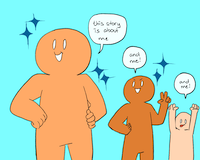
Protagonists are the main leading characters of your webcomic who drive the story forward, and this can be through either internal arcs of development, external conflicts with antagonists, or both. Whether or not a reader is invested in those main characters can make or break your audience’s engagement with your story, so it’s worth exploring what makes these characters compelling to follow in a long-form webcomic.
SFX
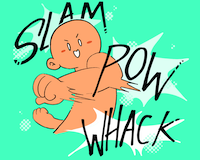
Sound effects are a classic in comics for a reason: we have a flat noiseless page and sometimes we want to give it a noise or two! There are all kinds of approaches to integrating sound effects depending on the mood of the scene, so finding ways that work with your webcomic-making process is an exercise that can really make your story more immersive! Let’s talk about it!
Getting Back on the Horse
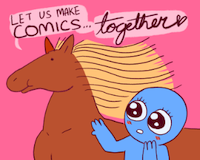
So you got hit with Life™ and haven’t worked on your comic in a while, and now you’re trying to get back to it, but are having troubles getting things going again. It may take time, but it’s never too late to get back on that horse and rebuild your confidence again. Join our hosts as they discuss tips and tricks to getting the comics horse saddled and back on the comics road.
Webcomic Platforms
Depending on the scope and needs of your webcomic project, a webcomic platform can be a great addition, or alternative, to an independent website. Many platforms have come and gone across the years, but today in 2026, the most well known options are Webtoon, Tapas, and Comic Fury. There can be a lot of confusion about what webcomic platforms can and can’t do for your project, so we’re going to dig into what they’re all about and what you can expect when you use them.
Receiving & Processing Critique
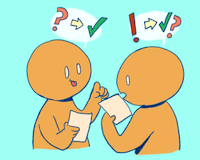
Webcomics have a lot of moving pieces, and constructive critique can be an excellent way to troubleshoot those pieces or get around road blocks. We understand that it can be scary to ask for a critique of your work, but learning how to receive and process critique can help you, and your webcomic, to improve and grow. Today we're going to talk about how to be on the receiving end of critique.
The Truth About Art School

Have you come across a creator with a style that astounds you and wished you could bottle it up for yourself? Perhaps even....devour it? Join us today as our hosts discuss the dark secret behind art school...and the truth about how they really got their webcomic powers.
Commissions and Contract Work
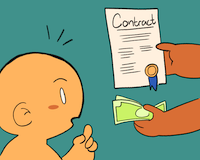
One of the biggest questions about making comics is: what roads are available to make money off of making comics? One direction that many creators go is commissions or contract work. Contract work is specifically entering into some kind of agreement, where someone is paying you for your comic-related skills. It can be a simple illustration commission that you draw for someone in a day, or it can be something long-term that spans years and years.
Same Face Syndrome
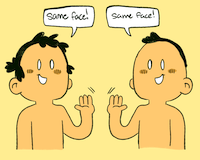
So here’s our scenario: you’re making your webcomic, your readers are following to the best of their ability, but you’re hearing the feedback that they can’t tell some of the characters apart. This can be about how you draw them, the styles and coloring you’re using… OR there could be aspects of your writing that are affecting how they’re perceived. For whatever reason, people are getting confused. That's what we call Same Face Syndrome and we're here to help you diagnose and treat.
Comedy
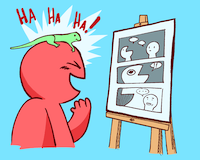
There are a lot of approaches to comedy in comics, and I wanted to get an episode together about that. Humor is OFTEN rooted in all kinds of cultural trends: current events, age groups, time periods, and styles, so it can be hard when people ask about how to learn to write comedy to find a way to talk about it! But Bob and Delphina are going to do their best today to break down at least their experience and approaches, and hopefully that’ll help you too
Buffers
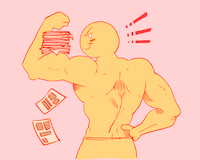
We’re not here to tell you how to live your life. If you want to post every comic page as soon as you’re done with it, that’s valid. But! A buffer of comic pages can help keep your comic on a steady release schedule, set healthy reader expectations, and prevent burnout or stress during the times when you can’t be at your drawing desk as often. So let’s talk about buffers!
Jam Session! Motivation
How do you stay motivated making comics? It's a hard question, so today we're going to jam about it and see what answers we can find!
Shortcuts and Time Savers
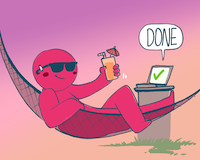
Webcomics take so long, and while the perfectionist in our brains might tell us that we MUST do everything the long way, I think we've all pretty quickly learned that the easier you make the journey for yourself, the better. So this is going to be some quick lessons we've learned that changed our process and made life easier.
Coming Up With Names
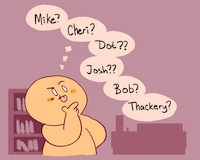
Does your webcomic contain characters? Maybe even places? Perhaps it also needs.... a title? If any of these things are true, you've probably had to sit down and face the struggle of deciding names for the things in your comic, as well as for the comic itself. These things are important, giving vital information about tone, genre, details of setting, and all sorts of other cues to the reader... But why's it gotta be so hard? Anyway, today we're gonna talk about it!
Plotting a Webcomic
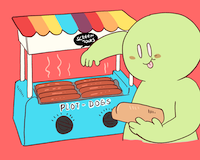
Coming up with characters and scenarios is one thing, but when you're working in a longform narrative comic, you're going to want to think about a plot. Planning out your plot in a webcomic is a unique challenge compared to some other mediums, so today we're going to talk about it!
Themes
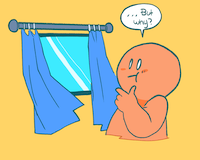
The concept of a "theme" is something that comes up in writing when we're talking about character motivations or plot in a longform narrative comic, and it's basically a word or concept that's at the core of what you're trying to say in your story. So we're going to talk about what themes are, how they come about, and how you can use them!
The Intro "DO IT (feat. Shia LaBeouf)", and the Outro "It's Good To See You Again!!", both by Adrianwave, have been used and modified in good faith under the Creative Commons Attribution-Share Alike 3.0 Licensed. Edits include: Fade IN/OUT, and a repeat added to the beginning of "It's Good To See You Again!!". For more information on this creative commons use, please reference https://creativecommons.org/licenses/by-sa/3.0/